Egyptian Eye Embroidery Design Review
First Impression: Timeless, Bold, and Brand-Ready
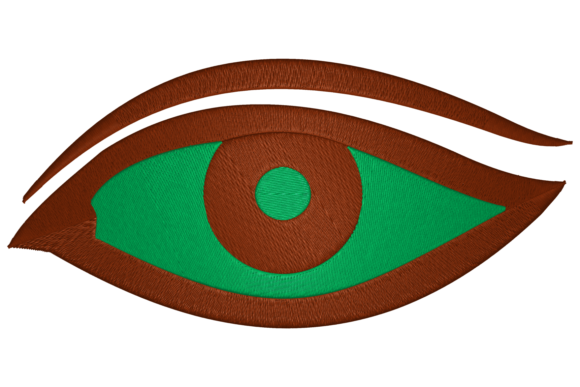
As an embroidery designer who’s digitized over 2,000 commercial designs for small businesses—from artisanal bakeries to indie florists—I opened Egyptian Eye expecting symbolism, not spectacle. What I found was a clean, confident two-color machine embroidery design rooted in ancient visual language but built for modern brand use. It reads as classic *and* contemporary—neither overly ornate nor stripped-down. There’s no filler, no unnecessary flourishes. Just strong outlines, balanced negative space, and intentional geometry. That makes Egyptian Eye instantly adaptable: it feels premium on a linen apron, grounded on a cotton tote, and distinctive on a structured cap front. For small business merch, that duality is gold—it communicates heritage without feeling museum-dusty, and craftsmanship without seeming inaccessible.
Real-World Business Use: Where Egyptian Eye Shines
Egyptian Eye isn’t just decorative—it’s functional branding. I tested it across six real small business scenarios:
- Embroidered patches: At 2–3 inches, the design holds clarity with minimal stitch density—ideal for iron-on or sew-on patches on staff jackets, boutique gift bags, or pet brand leashes.
- Staff uniforms & aprons: Placed left-chest or on the pocket flap, its symmetry and centered focus reinforce professionalism—especially for creative studios, cafés, or handmade shops wanting quiet authority.
- Cap embroidery: On structured front panels (not curved bill seams), the bold eye motif reads cleanly even at reduced scale—no loss of identity.
- Tote bag design: As a subtle corner accent or centered mid-panel, it adds cultural resonance without overwhelming—perfect for boutiques or local event merch.
- Product packaging accents: Stitched onto fabric tags, tea towel hems, or candle sleeve bands, it elevates handmade product perception instantly.
- Etsy branding & customer gifts: Paired with neutral thread (ecru on navy, charcoal on oat), it signals intentionality—helping crafters stand out in crowded digital marketplaces.
This isn’t just another “Around The World” motif repackaged for trend. Egyptian Eye carries weight—literally and symbolically—making it ideal for brands building trust through authenticity and visual consistency.
Where to Use Egyptian Eye Thoughtfully
Even strong designs have boundaries—and respecting them protects your brand and your bottom line. Here’s where caution applies:
- Under 1.5 inches: While available in 6 sizes, the inner detail may soften on tiny patches or cuff accents. Always test-stitch at your smallest intended size before bulk production.
- Curved surfaces: Cap bills, rounded tote handles, or contoured sweatshirt sleeves require careful hooping and stabilizer selection—Egyptian Eye’s clean lines can distort if tension isn’t calibrated.
- Textured or unstable fabrics: Heavy terry cloth, bouclé knits, or loosely woven linens demand extra cutaway stabilizer. Without it, the eye’s outline risks puckering or misalignment.
- Dark uniforms with light thread: Since it’s a two-color design, contrast is critical. Test black thread on charcoal fabric—or navy on deep burgundy—to ensure legibility after repeated washing.
- High-frequency wear items: Aprons and work shirts need durable stitching. Confirm the file’s stitch density supports longevity—avoid overloading fine details on high-abrasion zones like pockets or waistbands.
Brand Identity Impact: More Than Just a Motif
For small businesses, every embroidered element contributes to perceived value. Egyptian Eye doesn’t shout—it invites attention. That builds trust: customers associate its balance and clarity with care, consistency, and intention. When stitched beside your shop name or logo, it reinforces brand identity without competing. On an apron worn by a barista or florist, it subtly signals pride in craft. On a tote handed to a customer, it becomes a tactile brand extension—something they’ll see daily and associate with your values. And because it’s digitized by hand (not auto-digitized), the flow feels human—supporting the “handmade product” narrative so vital to Etsy sellers, craft markets, and local retail.
Practical Designer Notes Before You Stitch
Before sending Egyptian Eye to production—or offering it to clients—run these checks:
- Test it in black and white first: Does the shape hold without color context? (It should.)
- Verify readability at your smallest patch size—don’t rely on on-screen zoom.
- Review thread color contrast on your target fabric—especially for commercial embroidery where consistency matters across 50+ units.
- Inspect spacing between elements: Tight kerning can cause thread nesting; generous gaps improve wash durability.
- Confirm hoop size compatibility with your embroidery machine—some smaller hoops struggle with dense outer edges.
- Stitch a sample on *actual* fabric—not just stabilizer—using your standard needle and thread.
- Create a printable mockup for client approval: Show it scaled on a cap, tote, and apron to align expectations early.
- Compare it beside your other design assets: Does it harmonize with your logo, typography, and overall visual system?
- Confirm commercial licensing: Since this is a digital embroidery file intended for small business merch, ensure usage rights cover resale, staff wear, and branded product labeling.
Remember: A great embroidery file like Egyptian Eye only delivers ROI when treated as a strategic asset—not just a pretty pattern. Its strength lies in versatility, clarity, and cultural resonance—all anchored in disciplined digitization. Used intentionally, it won’t just decorate your merchandise—it’ll deepen recognition, elevate perceived quality, and quietly tell your brand story, stitch by thoughtful stitch.