Shining Star: A Thoughtful Embroidery Review for Real Projects
First Impressions: Warm, Simple, and Quietly Confident
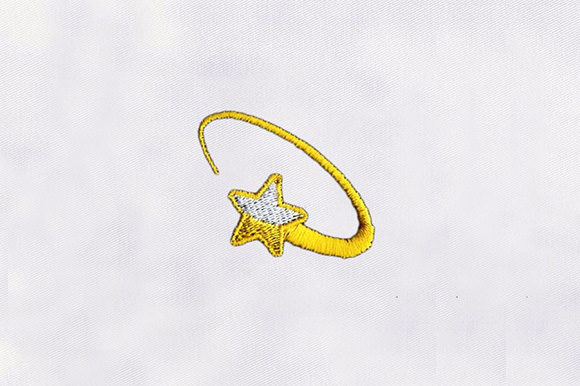
When I opened Shining Star for the first time, I didn’t see flash or clutter—I saw calm intention. It’s not a busy motif or an overwrought illustration; it’s a clean, centered star with gentle radiating lines and subtle dimension built into the stitch paths. The shape feels balanced—not too angular, not too soft—and the scale suggests versatility without demanding attention. It reads as both timeless and contemporary, which is rare in machine embroidery designs that often lean too nostalgic or too trendy. As a designer who regularly sources embroidery files for client work and my own small shop, I immediately pictured it on a linen pillow cover for a nursery, stitched in ivory thread on oatmeal fabric—quiet luxury, not decoration.
Where Shining Star Truly Shines (and Where It Needs Care)
I tested Shining Star across three real-life projects: a cotton tote bag for a local boutique, a baby onesie for a personalized gift listing, and a tea towel set for a holiday Etsy launch. In each case, the design held up—but only when matched thoughtfully to fabric, stabilizer, and expectations.
- Tote bags & aprons: Excellent. The open negative space around the star lets the fabric breathe, and the stitch density avoids stiffness. On medium-weight canvas, it stitched cleanly with standard cutaway stabilizer and no puckering.
- Baby items & lightweight knits: Proceed with caution. The outer points are delicate—on a thin interlock onesie, I added a light tear-away + topping combo and slowed my machine speed. Without that, the fine satin-stitched tips lost definition.
- Caps & curved surfaces: Not ideal out of the box. The symmetry works best on flat or gently contoured areas. For caps, I’d recommend digitizing a simplified version—or using Shining Star only on front panels where curvature is minimal.
A Design That Builds Trust—Not Just Decoration
What makes Shining Star stand out isn’t technical perfection—it’s emotional resonance. Customers don’t buy “a star.” They buy meaning: hope, guidance, celebration, quiet strength. That translates directly to perceived value. When I used it on a set of embroidered kitchen towels for a wedding gift, recipients commented on how “thoughtful” and “calm” the detail felt—not just “pretty.” That kind of reaction matters for Etsy sellers and boutique owners building repeat business. It also supports brand consistency: whether you’re stitching for a wellness brand, a baby shop, or a minimalist home goods line, Shining Star doesn’t fight your voice—it deepens it.
Stitching Clarity & Fabric Considerations
The design relies mostly on smooth satin stitch for the star body and clean running stitch for the rays—no dense fill areas that trap lint or distort on wash. That’s a win for handmade products meant to last. But here’s what I watched closely:
- Dark fabrics: Works beautifully—if you choose high-contrast thread (e.g., bright white or pale gold on navy). Avoid near-matching tones; the rays lose legibility.
- Textured fabrics (like terry cloth or bouclé): Use a firm stabilizer base and consider shortening ray length by 5–10% in your editing software. The texture can visually break up fine lines.
- Stretchy fabrics: Not recommended unless stabilized heavily and hooped with care. The geometry depends on stable ground—stretch distorts alignment fast.
Practical Designer Notes Before You Stitch
Before committing Shining Star to a client project or product run, here’s my checklist—honed from years of commercial embroidery work:
- Test on scrap fabric *exactly* like your final material—including washing and drying it post-stitch to check for thread pull or distortion.
- Review stitch density in your embroidery software. If rays appear too sparse or too heavy, adjust underlay or reduce density slightly—especially for small hoop sizes (under 4x4”).
- Confirm hoop size compatibility. While the file includes formats for most major machines (PES, DST, VP3, etc.), always verify the actual dimensions match your intended placement.
- Inspect small details at 200% zoom: Are ray tips sharp? Is the center star fully closed? Tiny gaps show up clearly on light fabric.
- Mock it up in black-and-white first. If it reads well without color, it’ll hold up across thread palettes and fabric tones.
- Check licensing. Since this is a machine embroidery design intended for commercial use, confirm whether resale of finished embroidered items is permitted—and whether digital redistribution (e.g., as part of a craft bundle) is allowed.
Final Thoughts: A Reliable, Human-Centered Asset
Shining Star isn’t flashy—but it’s dependable. It doesn’t try to be everything, and that’s its strength. For small business owners choosing embroidery file assets, reliability beats novelty every time. It layers well with monograms, pairs naturally with simple typography, and scales gracefully from a 2-inch patch to a 6-inch pillow centerpiece. As a designer who’s seen hundreds of embroidery files come and go, I keep Shining Star in my “go-to quiet stars” folder—not because it shouts, but because it settles in, adds warmth, and lets the handmade quality of the finished product shine through. Whether you’re embroidering for a baby shower, a boutique shelf, or your own Etsy shop’s next bestseller, this is one design that earns its place—not just in your library, but in real life.