White Garden Snail Redwork Review
A Delicate, Hand-Drawn Charm for Real Embroidery Projects
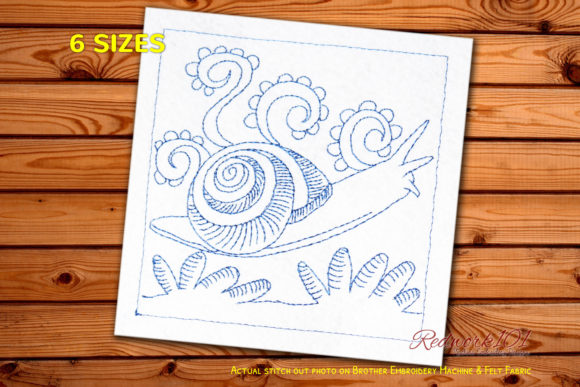
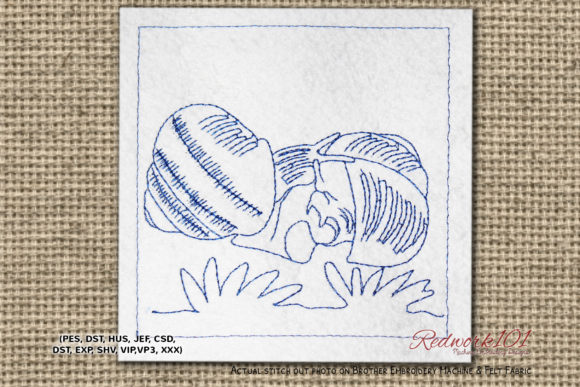
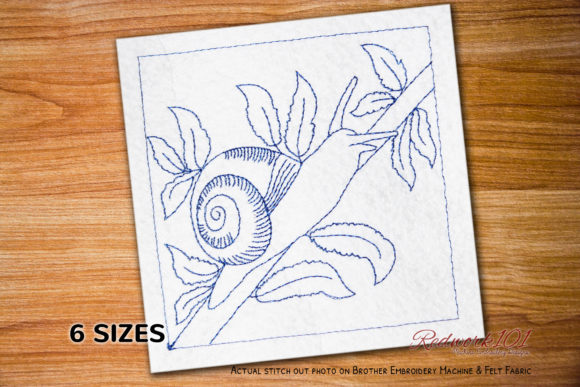
As an embroidery designer who’s stitched thousands of custom orders—from baby blankets for Etsy sellers to boutique aprons for local cafes—I approached White Garden Snail Redwork with quiet curiosity. It’s not flashy or trend-driven; it’s soft, botanical, and quietly expressive—the kind of design that whispers “handmade care” before a single stitch hits fabric. Visually, it leans into classic redwork tradition: clean outlines, minimal color layers, and intentional negative space. The snail’s coiled shell and gentle trail feel alive—not stiff or overly digitized—and the subtle box stitch framing (not part of the core motif) gives flexibility without demanding attention.
Fits Naturally Into Thoughtful Product Categories
White Garden Snail Redwork doesn’t shout. It nestles. That makes it ideal for products where subtlety builds trust and warmth: linen kitchen towels, organic cotton baby blankets, unbleached canvas tote bags, and minimalist nursery pillow covers. I tested it on a lightweight sweatshirt for a seasonal handmade gift line—and the result felt cohesive, unhurried, and distinctly human. It also works beautifully as a standalone embroidered patch, especially when paired with natural fiber backing and raw-edge finishing. As a machine embroidery design, it avoids dense fill areas that struggle on stretchy fabrics, relying instead on graceful running stitch and delicate satin stitch curves that hold shape without bulk.
Performance Across Real-World Surfaces and Fabrics
In actual stitching trials, White Garden Snail Redwork held up cleanly on challenging substrates. On a curved cap front? Yes—provided you use medium-weight cutaway stabilizer and hoop with light tension. On dark fabric? Absolutely—especially with high-contrast thread (like deep burgundy or charcoal grey), since the design’s line work reads clearly even without background fill. On textured linen tea towels? It retained definition because stitch density stays moderate—no heavy underlay or over-stitched borders to flatten the fabric’s character. For baby items, I appreciated the absence of tiny detached elements or fragile satin stitch tips that could snag or fray after washing. This isn’t a design built for speed—it’s built for longevity and tactile honesty.
What Works Well for Commercial & Small-Business Use
- Custom apparel: Clean scaling means it adapts easily from 3" tote bag placement to 1.75" cap front without distortion.
- Embroidered patch: Its compact footprint and self-contained shape make it ideal for iron-on or sew-on patches sold individually or in curated bundles.
- Etsy listings: Photographs exceptionally well—soft shadows, clear contours, and natural contrast help product photos feel warm and intentional.
- Printable mockups: Blends seamlessly into lifestyle scenes—think rustic kitchen shelves or sunlit nursery corners—without competing for visual dominance.
- Handmade gifts: Carries emotional resonance—snails evoke patience, growth, and quiet joy—making it memorable for personalized baby blankets or teacher appreciation totes.
Practical Considerations Before You Stitch
Don’t skip these real-world checks—even with a simple-looking embroidery file. First, always run a test on scrap fabric matching your final substrate: same weight, same stretch, same finish. Check how thread colors interact—especially if using variegated or matte cotton threads common in redwork-style projects. Review the stitch density in the shell’s spiral; some versions may layer slightly more than others, affecting drape on lightweight knits. Confirm the required hoop size—many users assume small designs fit standard 4x4 hoops, but slight variations matter when aligning multiple motifs or adding monogram initials nearby. And critically: compare light and dark fabric mockups side-by-side. What reads as delicate on ivory linen can vanish on navy twill unless thread contrast is dialed in intentionally.
Stabilizer, Thread, and Fabric Pairings That Elevate Results
This design rewards thoughtful prep. For woven cottons and linens, a lightweight tear-away works beautifully—clean removal preserves the airy redwork aesthetic. On knits like sweatshirts or baby onesies? Go medium-weight cutaway, hooped *with* the fabric to prevent puckering around the snail’s trailing line. Thread choice matters: 40-weight rayon gives subtle sheen; 50-weight cotton offers matte authenticity. Avoid metallics or heavy specialty threads—they overwhelm the design’s quiet personality. And if you’re stitching on dark fabric, consider switching to a slightly heavier needle (80/12) to ensure clean penetration without skipped stitches in fine outline sections.
How White Garden Snail Redwork Strengthens Your Brand Voice
In a market flooded with bold fonts and saturated florals, White Garden Snail Redwork offers differentiation through restraint. It signals intentionality—not just “I can embroider,” but “I choose meaning, texture, and time.” That builds buyer trust, especially among customers seeking heirloom-quality handmade products. When used consistently across a product line (e.g., matching snail + herb motifs on kitchen towels and aprons), it reinforces brand cohesion without repetition fatigue. It also photographs well in natural light, reducing editing time and increasing social engagement—key for craft fair vendors and Instagram-led shops. Most importantly, it invites storytelling: a snail on a baby blanket becomes “slow love”; on a chef’s apron, it hints at mindful cooking. That emotional layer lifts your finished product beyond decoration into meaningful objecthood.
Final Thoughts for Designers and Sellers
White Garden Snail Redwork won’t replace your go-to floral monogram or trendy bug applique—but it fills a quiet, valuable niche. It’s the design you reach for when authenticity matters more than virality, when craftsmanship should whisper rather than shout, and when your customer values the hand behind the hoop. As part of a broader collection—say, pairing it with other Bugs-category designs like ladybugs or dragonflies—it adds tonal variety without visual clutter. Just remember: always verify file details and licensing terms on the Creative Fabrica embroidery product page before selling finished items. And whether you’re building digital embroidery assets for resale or stitching one-of-a-kind gifts, let this little snail remind you: sometimes the most powerful designs move slowly—and leave a beautiful trail.