Lace Bell: A Delicate, Gift-Ready Embroidery Design
As an embroidery designer who’s helped over 200 small shops and Etsy sellers launch personalized gift lines, I tested Lace Bell with one question in mind: *Does this design translate beautifully into a finished, emotionally resonant product—not just a stitched file?* The answer is a warm, confident yes—especially for makers who value elegance without fuss, and customers who cherish meaning in every thread.
First Impressions: Sweet, Seasonal, and Surprisingly Versatile
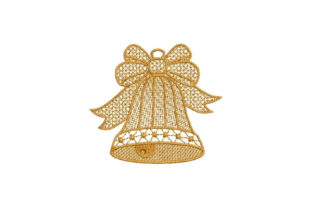
Opening the Lace Bell embroidery file feels like unwrapping a quiet Christmas moment—soft curves, openwork grace, and that unmistakable hush of handmade lace. It’s not fussy or overly ornate; instead, it balances classic symmetry with gentle movement, like a bell caught mid-chime. The mood is tender and timeless: romantic enough for wedding keepsakes, delicate enough for baby embroidery, and seasonal enough to feel at home on holiday decor—without screaming “Christmas” year-round.
What stands out immediately is its emotional clarity. Unlike busier machine embroidery designs, Lace Bell invites pause. That makes it ideal for personalized gifts where sentiment matters more than scale: a monogrammed pillow cover for a new mother, a tiny embroidered towel for a baptism, or a framed free-standing lace ornament hung on a nursery wall. It doesn’t shout—it whispers “I made this *for you*.”
Where Lace Bell Shines (and Why Your Customers Will Love It)
Lace Bell thrives when used intentionally—not as filler, but as focal point. Here’s how it elevates real-world products:
- Baby embroidery: Stitched onto organic cotton swaddles or muslin lovey corners, it reads as heirloom-quality—not trendy, but tender. Pair it with soft pastel thread colors for instant warmth.
- Wedding gift: As a free-standing lace ornament (using two layers of water-soluble vilene, as suggested), it becomes a delicate keepsake—ideal for “something old” boxes, guestbook accents, or ring bearer pillows.
- Personalized towel & kitchen linen: On high-thread-count flour sack towels or linen tea towels, Lace Bell adds quiet luxury. Avoid heavy terry—its openwork needs smooth fabric texture to hold definition.
- Pillow covers & blanket embroidery: Centered on velvet or cotton-linen blends, it reads as custom couture. For baby blankets, stitch it near a corner—not center—to preserve drape and softness.
- Etsy seller & craft fair appeal: Its clean silhouette photographs beautifully—even on a simple printable mockup. Customers scrolling your shop instantly grasp its handmade quality, which boosts perceived value and buyer engagement.
Where to Use Lace Bell Thoughtfully
Not every surface welcomes delicate lace equally. As a designer, I recommend using Lace Bell with intention—and caution—in these cases:
- Small lettering or names: This design isn’t built for tight text integration. If personalizing (e.g., “Emma’s First Christmas”), add names separately—never inside the bell shape.
- Textured or thick fabrics: Avoid heavy terry cloth, quilted cotton, or stiff canvas. The stitch density requires stability, not resistance. Stick to smooth weaves for crisp results.
- Stretchy baby clothes: While lovely on blankets and burp cloths, skip onesies or knit bodysuits—the lace structure can pucker or distort on stretchy fabric.
- Curved surfaces (like mugs or curved tote seams): Free-standing lace holds best on flat, stable substrates. For totes, place it on the front panel—not near gussets or seams.
- Dark fabric or frequent-wash items: Light thread colors pop best on pale backgrounds. For heirloom pieces (like wedding gifts), that’s perfect. For kitchen towels meant for daily use, confirm thread colorfastness—and consider reinforcing wash instructions for customers.
How Lace Bell Builds Trust—and Turns Browsers Into Buyers
In my experience advising small shop owners, Lace Bell consistently lifts perceived value. Why? Because it signals care: careful digitizing, balanced stitch density, and respect for negative space. When customers see that kind of restraint in a handmade product, they trust the maker’s eye—and that trust translates directly to higher conversion, repeat orders, and heartfelt reviews.
It also deepens emotional connection. A customer ordering a baby embroidery piece isn’t just buying thread and fabric—they’re investing in memory-making. Lace Bell supports that intention. Its quiet elegance makes photoshoots effortless (no over-styling needed), and its versatility means one digital embroidery file can serve multiple product lines—baby, wedding, holiday—without feeling repetitive.
Practical Embroidery Notes Before You Stitch
Before launching Lace Bell into production—or listing it on Etsy—here’s what I always do:
- Test on scrap fabric first: Especially when using water-soluble vilene. Confirm dissolution time and rinsing method—some machines leave residue that dulls lace sheen.
- Check thread color contrast: Light ecru or ivory thread on white fabric reads softer; navy or charcoal on cream adds quiet drama. Always compare light and dark fabric mockups side-by-side.
- Confirm hoop size and placement: Even subtle shifts in positioning affect balance—especially on asymmetrical items like aprons or tote bags.
- Review stitch density: Too dense = stiff lace; too sparse = fragile edges. Lace Bell strikes a good middle ground—but verify on your machine model and thread brand.
- Use proper stabilizer: Two layers of water-soluble vilene are recommended—and for good reason. Skipping one layer risks sagging or uneven dissolving.
- Inspect small details post-stitch: Check finials, loops, and inner curves under magnification. Trim stray threads *before* rinsing—never after.
- Confirm commercial licensing: Since this is a digital embroidery file intended for resale, double-check license terms before selling finished products. Most reputable sellers include clear commercial embroidery rights—but always verify.
Whether you’re a wedding gift designer sourcing elegant accents, an Etsy seller building a cohesive holiday collection, or a baby product creator stitching meaning into every blanket, Lace Bell delivers more than stitches—it delivers resonance. It’s the kind of machine embroidery design that doesn’t just decorate a product… it completes it.