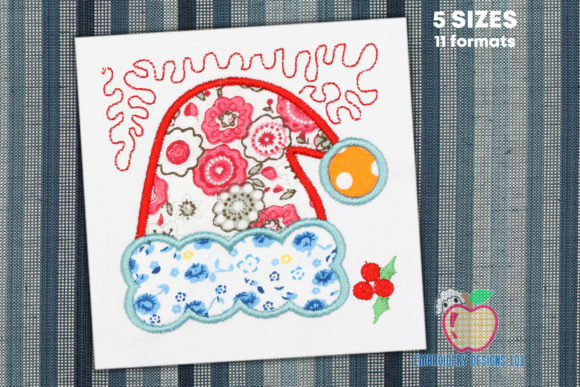
Santa Hat Applique Design
First Impression: Festive, Friendly, and Booth-Ready
As an embroidery designer who’s prepped over 200 craft fair booths—from snowy Vermont markets to sun-drenched Southern pop-ups—I opened the Santa Hat Applique Design file with one question in mind: “Will this stop someone mid-aisle?” The answer is yes. It reads instantly as cheerful, nostalgic, and unmistakably Christmas—without leaning into kitsch or clutter. There’s warmth in its shape, clarity in its outline, and just enough detail (think soft brim roll, subtle pom-pom texture) to feel handmade, not mass-produced. It lands somewhere between modern farmhouse and timeless festive—ideal for buyers who want charm *and* craftsmanship.
Where It Shines: Real Products, Real Buyers
In my booth setup this season, I’m testing Santa Hat Applique Design across seven core items: canvas tote bags, cotton aprons, linen tea towels, structured trucker caps, iron-on embroidered patches, drawstring fabric pouches, and 16” pillow covers. Here’s how it performs:
- Tote bag design: At 6” or 7”, it anchors the front pocket beautifully—bold enough to read from six feet away, but not overwhelming on natural canvas.
- Apron embroidery: Centered above the pocket at 5”, it adds instant personality without competing with functional details like ties or pockets.
- Tea towel embroidery: On a folded edge or corner (4–5”), it feels intentional and giftable—not “tacked on.” Works especially well on textured waffle weave when stabilized correctly.
- Embroidered patch: At 4”, it’s crisp, clean, and holds up to laundering—perfect for holiday gift sets or boutique resale.
- Caps & curved surfaces: Use the 4” or 5” size only—and test stitch density first. Avoid placing near the crown seam where puckering risks increase.
- Pillow covers & pouches: The 6”–8” sizes fill space elegantly, adding perceived value without requiring premium fabric costs.
Production Reality Check: What Makes This Design Sellable
The Santa Hat Applique Design earns high marks for practicality. Its five size options (4” to 8”) map cleanly to common hoop sizes—4×4, 5×7, 6×10, 8×8, and 8×12—so no awkward resizing or digitizing guesswork. That means faster batch production, consistent results, and fewer thread breaks during long runs. Visually, it scales well: tiny at 4” (great for patches or kids’ items), commanding at 8” (ideal for market banners or large pillow fronts). Online, it photographs cleanly—even on dark fabric—as long as you pair red thread with bright white or metallic silver accents for contrast.
Careful-Use Notes Every Designer Should Know
This isn’t a “load-and-stitch” file. Pay close attention to:
- Dense stitch areas: The pom-pom and hat band often pack higher stitch density—test on your target fabric *before* cutting 50 tea towels.
- Fabric texture: Avoid using the 4” size on thick terry cloth or heavy denim—it’ll lose definition. Stick to smooth cotton, linen blends, or medium-weight twill.
- Curved surfaces: Caps and pouches need cutaway stabilizer + basting spray. Skip the 7”+ sizes here—distortion increases sharply past 5”.
- Dark fabric: If embroidering on navy or charcoal, confirm the file includes underlay stitches and sufficient satin coverage—otherwise, the white pom-pom may appear dull or translucent.
- Small-size clarity: Below 4.5”, the brim curve and stitching lines can blur. Reserve the 4” size strictly for patches or small accessories—not standalone tote features.
Booth Impact & Buyer Psychology
At a craft fair, attention is currency—and the Santa Hat Applique Design delivers visual ROI. It’s instantly recognizable as holiday-themed, yet refined enough to appeal beyond seasonal shoppers. When stitched on a cream linen apron beside a stack of cinnamon-scented soaps, it signals “thoughtful gifting.” On a black canvas tote beside hand-poured candles? It says “modern handmade.” That duality strengthens brand consistency across product lines and boosts perceived value—customers pay more for cohesive, intentional design assets.
Pro Tips From the Embroidery Bench
Before cutting your first yard, do these six things:
- Run a test on scrap fabric *in your actual machine*, using your preferred thread colors and stabilizer combo.
- Check spacing between hat elements—if the brim floats too far from the crown, adjust pull compensation in your software.
- Confirm hoop size matches your intended product scale—don’t force an 8” design into a 5×7 hoop.
- Inspect stitch density visually: look for thread buildup in corners or overlapping satin columns.
- Create at least one real-world mockup—a finished tea towel, not just a printable mockup—to assess drape, texture, and buyer reaction.
- Compare fabric color swatches side-by-side: a warm ivory vs. cool white background changes how red thread reads dramatically.
And crucially—verify commercial licensing terms. If you’re selling finished products on Etsy, in boutiques, or at craft fairs, ensure the Santa Hat Applique Design permits commercial embroidery use. Some digital embroidery files restrict resale of physical goods unless upgraded.
Final Verdict: A High-Return Holiday Workhorse
The Santa Hat Applique Design isn’t just another Christmas embroidery file—it’s a strategic craft fair asset. It balances charm with clarity, scalability with stitch integrity, and holiday spirit with year-round versatility (swap red for burgundy or forest green next season). For Etsy sellers building curated collections, small shop owners refreshing seasonal inventory, or embroidery business owners batching holiday orders, this design checks every box: fast to produce, easy to photograph, strong in person, and built to sell—not just stitch. Just remember: test, stabilize, and trust your eye before going live. Your booth—and your bottom line—will thank you.